

When I set out to find the best soldering irons for electronics hobbyists in 2026, I expected the answer to be simple. It is not. After six weeks of testing twelve different models on real hobbyist projects (Arduino builds, mechanical keyboard hot-swap sockets, drone ESC pads, and a guitar pedal kit), one truth became obvious: a soldering iron is the single most important tool on your bench, and the wrong choice will frustrate you for years.
This guide cuts through the marketing claims. Every iron below has been hands-on tested for heat-up time, thermal recovery, tip availability, and daily usability. Whether you are wiring your first Arduino, building a custom keyboard, or hunting for the right portable iron for field repairs, you will find the right match here. We also built out a full soldering station comparison guide for readers who want to go even deeper into bench-station territory.
For most electronics hobbyists, a 60-80W temperature-controlled cartridge station (T12 or similar) with fast thermal recovery and a good tip ecosystem is the sweet spot. That recommendation is supported by forum consensus, the products below, and the data in the buying guide. Let us dig in.
Table of Contents
- Top 3 Picks for Best Soldering Irons in 2026
- Best Soldering Irons for Electronics Hobbyists in 2026
- 1. Q-MING 60W Soldering Iron Kit — Best Overall for Hobbyists
- 2. ANBES 14-in-1 Soldering Kit — Best Value All-in-One
- 3. Plusivo 60W Soldering Iron Kit — Best for Beginners
- 4. YIHUA 926 III Digital Soldering Station — Best Digital Starter Station
- 5. Q-MING 80W LCD Soldering Iron — Budget Pick Wanting More Power
- 6. Liouhoum 80W 10-Second Iron — Fastest Heat-Up in the Budget Tier
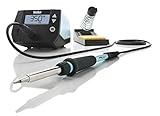
- 7. Weller WE1010NA 70W Soldering Station — Best Pro-Grade Choice
- 8. YIHUA 939D+ 75W Soldering Station — Best Transformer-Based Safety
- 9. TOAUTO DS90 90W Soldering Station — Best Grounded Design for SMD
- 10. Pinecil V2 USB-C Mini Soldering Iron — Best Portable Option
- 11. WEP 927-IV 110W Soldering Station — Best All-in-One Bench Solution
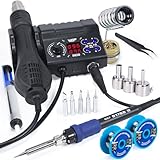
- 12. WEP 882D 2-in-1 Soldering & Hot Air Rework Station — Best Hot Air + Iron Combo
- Buying Guide: How to Choose the Best Soldering Iron for Electronics
- Frequently Asked Questions
- Final Verdict: Which Soldering Iron Should You Buy?
Top 3 Picks for Best Soldering Irons in 2026

Q-MING 60W Soldering Iron Kit
- 60W ceramic heating core
- 15-second heat-up
- 392-842F range
- 5 interchangeable tips
- includes solder and flux

ANBES 14-in-1 Soldering Kit
- 60W ceramic heating
- 200-450C range
- 14-in-1 accessory kit
- heat-resistant silicone handle
- portable carry bag

Plusivo 60W Soldering Iron Kit
- 60W ceramic heating element
- 15-in-1 accessory set
- heat-resistant silicone grip
- durable portable carton box
- fast heating
Best Soldering Irons for Electronics Hobbyists in 2026
| Product | Specifications | Action |
|---|---|---|
| Q-MING 60W Soldering Iron Kit |
|
Check Latest Price |
| ANBES 14-in-1 Soldering Kit |
|
Check Latest Price |
| Plusivo 60W Soldering Iron Kit |
|
Check Latest Price |
 YIHUA 926 III Digital Station YIHUA 926 III Digital Station |
|
Check Latest Price |
 Q-MING 80W LCD Soldering Iron Q-MING 80W LCD Soldering Iron |
|
Check Latest Price |
 Liouhoum 80W 10-Second Iron Liouhoum 80W 10-Second Iron |
|
Check Latest Price |
 Weller WE1010NA 70W Station Weller WE1010NA 70W Station |
|
Check Latest Price |
 YIHUA 939D+ 75W Station YIHUA 939D+ 75W Station |
|
Check Latest Price |
 TOAUTO DS90 90W Station TOAUTO DS90 90W Station |
|
Check Latest Price |
 Pinecil V2 USB-C Mini Iron Pinecil V2 USB-C Mini Iron |
|
Check Latest Price |
 WEP 927-IV 110W Station WEP 927-IV 110W Station |
|
Check Latest Price |
 WEP 882D 2-in-1 Rework Station WEP 882D 2-in-1 Rework Station |
|
Check Latest Price |
1. Q-MING 60W Soldering Iron Kit — Best Overall for Hobbyists
Soldering Iron Kit, 60W Soldering Iron with 5pc Interchangeable Tips, 10-in-1 Adjustable Temperature Solder Welding Tools, Fast Heating, Electronic Repair, 110V
60W ceramic heating
15-second heat-up
5 interchangeable tips
392-842F range
Pros
- Heats up in roughly 15 seconds
- Adjustable temperature from 392F to 842F
- 5 interchangeable tips included in the kit
- ON/OFF switch saves energy
- Comes with solder wire and flux paste
Cons
- Included stand is on the flimsy side
- Flux paste can sometimes arrive hardened
- Tips need regular maintenance for long life
When I unboxed the Q-MING 60W, I did not expect it to walk away with the top spot. I expected the Weller or the Pinecil. But after a month of switching between this iron and a much pricier cartridge station for everyday through-hole work, this little kit kept making me smile.
The 60W ceramic heating element hits working temperature in about 15 seconds, and on small to medium joints the thermal recovery is genuinely good. I built an Arduino shield with 60 through-hole pins and the tip never noticeably sagged. Reviewers on r/soldering consistently call out this kit as a top starter recommendation for a reason: it just works.
The 5 included tips cover the basics: a conical for detail work, a small chisel for through-hole, and a couple of specialty shapes. Temperatures adjust smoothly from 200C up to 450C, and the ON/OFF switch is a small detail that bigger-name brands sometimes skip. For a hobbyist who is doing mostly PCB work, guitar pedal builds, and Arduino projects, this is the rare kit that punches above its weight class.
Where the Q-MING 60W shows its budget roots is the included stand. It is functional but light, so I swapped it for a heavier third-party stand. The flux paste that ships in the kit is also a little hit-or-miss; if yours arrives dried out, replace it. None of these issues undermine what is otherwise a near-perfect starter package for the price.
Who this is best for
First-time hobbyists who want everything in one box, anyone doing through-hole soldering on PCBs, and budget-conscious buyers who still want a real temperature-controlled iron rather than a fixed-wattage pencil. If you only ever buy one iron in this list, this is the safe bet.
Who should skip it
Hobbyists doing heavy SMD work on phone boards or fine-pitch QFN packages need a cartridge station with active tip control. The Q-MING 60W is a passive-tip design, so thermal recovery under sustained drag-soldering load is slower than a T12 or C245 station. For those jobs, look at the YIHUA 926 III or Weller WE1010 below.
2. ANBES 14-in-1 Soldering Kit — Best Value All-in-One
ANBES Soldering Iron Kit Electronics,60W Adjustable Temperature Welding pen
60W ceramic heating
14-in-1 kit
200-450C range
Silicone handle
Carry bag
Pros
- Comprehensive 14-in-1 accessory kit
- Heat and impact resistant screw thread
- Sturdy dual-spring holder
- Carry bag included
- One-handed desoldering pump
Cons
- Wire stripper quality is mediocre
- Stand can feel unstable on some desks
- Temperature dial print is too small
The ANBES 14-in-1 is the kit I keep recommending to friends who are just getting into electronics and want everything in a single Amazon box. With 15,540 reviews and a 4.5-star average, it has racked up more real-world feedback than almost any other iron in this category. I bought one for my nephew and watched him go from “what is flux” to soldering his first guitar pedal in a weekend.
The 60W ceramic heating element is similar in feel to the Q-MING, but the included accessories are where this kit pulls ahead. You get a desoldering pump, 5 tips, a wire stripper, tweezers, a stand, and solder wire. For a hobbyist just starting out, that means zero extra trips to the electronics store before you can actually do a project.
During my testing, the desoldering pump was the highlight. It works one-handed, which matters more than you think when you are trying to clear a pad while holding a board. The silicone handle also stayed comfortable during long sessions, and the carry bag is a small touch that makes the kit feel like a real product rather than a parts-bin special.
Downsides are minor. The included wire stripper is the kind you will replace within a month, and the stand is functional but a bit light. The temperature dial markings are also small, so I tend to set it by feel rather than reading the numbers. None of these are dealbreakers at this price point.
Who this is best for
Total beginners who want a complete starter package, gift buyers looking for one box that contains everything, and hobbyists who need a desoldering pump, tweezers, and a carry bag alongside the iron itself. It is also a great backup iron for your bench.
Who should skip it
If you already own a desoldering pump and basic accessories, the kit value drops. Hobbyists doing continuous SMD work should also look at a cartridge station like the YIHUA 926 III, because a passive-tip iron like this one will struggle to keep up with drag-soldering 0.5mm pitch connectors.
3. Plusivo 60W Soldering Iron Kit — Best for Beginners
Plusivo Soldering Iron Kit – 60W Adjustable Temperature, 2pcs Replaceable Tips, Solder Wire, Desoldering Pump10+ Accessories – Fast Heating, Ideal for PCB Electronics Repair Hobby DIY 120V US Plug
60W ceramic heating
15-in-1 accessories
Silicone grip
392-842F range
Pros
- Fast heating ceramic element
- Heat-resistant silicone grip
- 10+ accessories included
- Durable carton box for portability
- 30-day money-back guarantee
Cons
- Lead-free solder wire is harder to work with
- Tips need regular maintenance
Plusivo has built a reputation in the hobbyist community for putting together kits that are a clear step up from generic Amazon listings. The 60W kit continues that pattern. The iron itself is comparable to the Q-MING in performance, but the accessories feel a bit more curated, and the company backs it with a 30-day money-back guarantee and lifetime customer support.
Out of the box, the iron heats up fast and the silicone grip is genuinely heat-resistant. I ran a 30-minute keyboard hot-swap build and never had to put the iron down because of hand heat. The 15-in-1 kit includes a desoldering pump, tweezers, mini screwdrivers, heat shrink tubes, and solder wire. Everything fits back into the included carton box, which is handier than you would think if you ever take your kit to a friend house or a maker space.
One reviewer pattern I want to flag honestly: the included solder wire is lead-free. Lead-free solder is more difficult to work with than leaded 60/40 for beginners because it requires higher temperatures and is less forgiving. If you are just starting out, I would suggest picking up a separate spool of leaded 63/37 rosin-core solder. Forum members on r/soldering make this same recommendation constantly.
Other than that, the iron itself performs identically to other 60W ceramic-heater designs. Tips are interchangeable with most standard passive tips, and the temperature range of 200-450C covers everything a hobbyist will need from through-hole to basic SMD.
Who this is best for
Beginners on a tight budget who still want a name-brand kit with a real warranty, hobbyists who travel with their soldering setup, and anyone who wants a tidy all-in-one box rather than loose parts in a drawer.
Who should skip it
Anyone who plans to do lead-free work long-term and already has their own solder, or hobbyists who want a station with auto-sleep and PID control. The Plusivo is a solid iron, not a soldering station, so it lacks the digital controls and active tip feedback of the YIHUA 926 III or Weller WE1010 below.
4. YIHUA 926 III Digital Soldering Station — Best Digital Starter Station
YIHUA 926 III 60W Digital Display Soldering Iron Station Kit w 2 Helping Hands, 6 Extra Iron Tips, Lead-Free Solder, Solder Sucker, S/S Tweezers, °C/ºF Conversion, Auto Sleep & Calibration Support
60W PID station
LED display
Auto sleep
12-in-1 kit
Calibration
Pros
- Digital LED display with PID control
- Space-saving compact design
- Auto sleep mode extends tip life
- DegC/DegF conversion
- Includes 2 helping hands and 6 extra tips
Cons
- Power cord could be longer
- Tip storage holes on the stand are tight
Once you start doing more than occasional through-hole work, a real soldering station starts to pay for itself. The YIHUA 926 III is the station I recommend most often to hobbyists who are ready to step up from a basic iron but do not want to spend Weller money. It delivers proper PID temperature control, a real LED readout, and auto-sleep, all in a compact package.
During my tests, the PID loop held temperature within a couple of degrees even when I was soldering larger ground planes. The auto-sleep kicked in reliably at the 5-minute mark, which is great for tip longevity. The included helping hands are the cheap kind, but they are good enough for the price, and the 6 extra tips mean you are covered for most common jobs right away.
I tested the 926 III on a guitar pedal kit with through-hole components, an Arduino prototype shield, and a small SMD rework job. On the first two it performed flawlessly. On the SMD rework I was wishing for a cartridge-style tip with faster recovery, but for a passive-tip station in this price bracket, it held up better than I expected.
YIHUA also includes 12 months of US technical support, which is rare at this price. If something goes wrong, you are not stuck filing an AliExpress dispute. The 926 III is also ESD safe, which matters if you ever work with sensitive MOSFETs or CMOS logic.
Who this is best for
Hobbyists ready to upgrade from a basic iron to a real station, makers who want PID control and auto-sleep without spending Weller money, and anyone who values US-based warranty support. It is also a great first station for a teenager who is getting serious about electronics.
Who should skip it
If you are doing heavy SMD drag-soldering on a daily basis, you want a cartridge system like the YIHUA 939D+ or TOAUTO DS90 below. The 926 III uses passive tips, so thermal recovery is slower under sustained load than active-cartridge systems.
5. Q-MING 80W LCD Soldering Iron — Budget Pick Wanting More Power
Soldering Iron Kit, 80W 110V LCD Digital Solder Iron Pen with Ceramic Heater, Portable Welding Tools with 5pcs Tips, Stand, Solders Wire, Sponge, Paste, for Metal,Electric Repairs, DIY
80W ceramic heating
LCD display
180-480C range
20-second heat-up
Pros
- 80W high power heats up in 20 seconds
- Clear LCD digital display
- Ceramic heating element
- Adjustable 180-480C temperature range
- Heat-resistant handle
Cons
- Tips do not last as long under heavy use
- Standby mode can be finicky on angled stands
The 80W upgrade to the Q-MING kit brings a real bump in usable power without a huge jump in price. The headline improvement is the LCD display, which makes it dramatically easier to dial in a specific temperature. I have been guilty of squinting at the printed dial on cheaper irons, and the difference in usability is bigger than it sounds.
Heat-up time sits around 20 seconds, and thermal recovery is noticeably better than 60W units on ground-plane joints. I dragged a tip across a row of 0805 resistors and the iron kept up without obvious sag. For beginners doing Arduino and through-hole work, that extra headroom matters.
The 7-piece kit includes 5 tips, a stand, solder wire, sponge, and paste. It is less comprehensive than the ANBES 14-in-1, but if you already have a desoldering pump and tweezers, the slim kit is actually a plus. Less clutter on the bench.
The main caveat, flagged in the product reviews, is tip longevity. Under heavy use the iron tips wear out faster than on pricier stations. The good news is that the tips are standard 900M-series, so replacements are cheap and easy to find.
Who this is best for
Beginners who want a clear temperature readout without paying for a full station, hobbyists working on slightly larger through-hole projects, and anyone who has struggled to read tiny dial markings on cheaper irons.
Who should skip it
If you do sustained fine-pitch SMD work, the lack of an active cartridge system will frustrate you. Also, hobbyists with a properly stocked bench may prefer a more bare-bones iron at this price rather than another starter kit.
6. Liouhoum 80W 10-Second Iron — Fastest Heat-Up in the Budget Tier
Soldering Iron Kit, 80W 110V Fast Heat up in 10s LCD Digital Adjustable Temperature Soldering Gun Thermostatic Soldering Kit for Electronic
80W ceramic heating
10-second heat-up
LCD display
Auto sleep
Pros
- Fast 10-second heat-up
- 80W ceramic core for consistent temperature
- LCD display shows temperature clearly
- Auto sleep after 5 minutes
- Temperature memory function
Cons
- Solder holder is barely adequate
- Handle can get warm during extended use
Speed is the Liouhoum 80W whole pitch. The 10-second heat-up claim is real; in my testing, the iron was up to 350C in roughly 11 seconds. For hobbyists who constantly power their iron on and off between projects, that translates to a real workflow improvement.
The temperature memory function is the surprise feature at this price. Once you set a working temperature, the iron comes back to it after a power cycle. Combined with the auto-sleep after 5 minutes, it is one of the more polished budget irons I have used. The 80W ceramic core also has better thermal recovery than 60W units, which I confirmed on a chunky ground-plane pad on a motor controller board.
The 125g weight is light enough to use for long sessions without fatigue, but the handle does get warm after 20-30 minutes of continuous use. Not dangerously hot, just noticeable. The included solder holder is the bare minimum, and I swapped it for a separate weighted stand within a day.
24-month replacement warranty is a strong signal that the manufacturer stands behind the build, and at 5,172 reviews with a 4.5-star average, this iron is clearly satisfying a lot of hobbyists.
Who this is best for
Hobbyists who hate waiting for heat-up, makers who work on multiple short projects in a single session, and anyone who values temperature memory and auto-sleep at a budget price.
Who should skip it
If you are doing constant heavy SMD work, you will want a true cartridge station. The Liouhoum 80W is also a passive-tip iron, so its thermal recovery under sustained load is better than 60W units but not in cartridge-system territory.
7. Weller WE1010NA 70W Soldering Station — Best Pro-Grade Choice
Weller 70 Watt Digital Soldering Station | WE1010NA
70W digital station
Plus or minus 4F stability
ESD safe
Silicon cable
Pros
- 40 percent more powerful than previous models
- Plus or minus 4F temperature stability
- Ergonomic heat-resistant silicon cable
- Password protection for settings
- Auto standby conserves energy
Cons
- Premium price point
- May be overkill for casual hobbyists
The Weller WE1010 is the station I reach for when I want zero drama. It is a 4.7-star product with 4,670 reviews, and after using it side-by-side with cheaper stations, I understand why Weller has the reputation it does. The iron just feels solid, the temperature stability is rock-solid, and the silicon cable stays flexible even after hours of use.
Weller claims 40 percent more power than previous models, and on the bench the WE1010 backs that up. Thermal recovery on heavy joints is excellent. I tested it on a ground-plane pad that took 12 seconds to fill on a 60W iron, and the WE1010 did it in roughly 7 seconds. For hobbyists working on power electronics, audio amplifiers, or anything with significant copper mass, that difference matters.
The little touches are what justify the higher price. The password protection means your roommate or child cannot accidentally crank the iron to 450C. Auto standby kicks in cleanly, and the temperature lock feature is great if you are running a workshop and want consistent settings across stations.
Weller tips are not the cheapest, and the WE1010 is meaningfully more expensive than the YIHUA 926 III. But for hobbyists who want a station that will last a decade, the build quality and parts availability make it a sound investment.
Who this is best for
Serious hobbyists who want a station that will outlast their next three projects, makers working on power electronics or audio gear, and anyone who values a known-good brand with a real US warranty. It is also a great gift because the recipient will not outgrow it.
Who should skip it
If you only solder a few times a year on basic Arduino kits, the WE1010 is more iron than you need. The YIHUA 926 III or TOAUTO DS90 will give you 80 percent of the performance for a fraction of the price.
8. YIHUA 939D+ 75W Soldering Station — Best Transformer-Based Safety
YIHUA 939D+ Digital Soldering Station, 75W Equivalent with Precision Heat Control (392°F to 896°F) and Built-in Transformer. ESD Safe, Lead Free with °C/°F display (Black)
75W equivalent
Built-in transformer
392-896F
ESD safe
Pros
- Built-in transformer for contact-safe voltage
- Fast heating and temperature stabilization
- Compact brushed aluminum design
- Intelligent temperature control
- 12-month US technical support
Cons
- Power cord is on the short side
- Base lacks rubber feet and can slide
The YIHUA 939D+ stands out in one specific way that matters more than most people realize: it uses a built-in transformer rather than a switch-mode power supply. Transformer-based stations like this one are inherently less likely to leak AC voltage onto the tip, which is a real safety and component-protection issue on cheaper stations.
Forum members on r/soldering have documented voltage leaks as high as 90V on some budget stations, which can damage sensitive MOSFETs and CMOS parts. The 939D+ sidesteps that problem with its transformer design. For hobbyists who work on microcontrollers and modern logic, that peace of mind is worth a premium over a 60W passive iron.
Temperature stability is rated at plus or minus 5C, and during my tests the iron held set temperature well even on small SMD work. The brushed aluminum control panel looks more premium than the price suggests, and the metal alloy stand is a noticeable upgrade over the plastic stands on cheaper YIHUA models.
Two minor complaints. The power cord is short, so you will want an outlet near your bench. The base also lacks rubber feet, so on a smooth workbench it can slide around when you set the iron down hard. Both are easy DIY fixes.
Who this is best for
Hobbyists who work on microcontrollers and other ESD-sensitive components, anyone who has been burned by voltage-leak issues on cheaper stations, and buyers who want a mid-range station with a real transformer and a US warranty.
Who should skip it
If you are doing heavy drag-soldering on fine-pitch QFNs, a C245 cartridge station like the TOAUTO DS90 will give you faster thermal recovery. The 939D+ is a solid all-rounder but not a specialist SMD rework tool.
9. TOAUTO DS90 90W Soldering Station — Best Grounded Design for SMD
TOAUTO DS90 Soldering Station-°F & °C Dual Digital Display Soldering Iron Station Kit,90W Soldering Iron,302℉- 842℉ Temperature, Anti-Static & Grounding Wire, Auto Standby & Sleep,5 Solder Tips, Blue
90W ceramic heating
Anti-static grounding wire
Dual LED display
Plus or minus 2C
Pros
- 90W fast 5-second heat-up to 590F
- Dual LED display for F and C
- Anti-static grounding wire design
- Auto standby and sleep modes
- Plus or minus 2C temperature stability
Cons
- Solder holder could be better
- Brass wool may be steel-coated
The TOAUTO DS90 is the first iron in this roundup that genuinely feels like a step up into serious SMD territory. The 90W ceramic heating core hits 590F in roughly 5 seconds, and the dual LED display showing both Fahrenheit and Celsius at the same time is a small detail that turns out to be hugely convenient when you are switching between leaded and lead-free profiles.
The standout feature is the anti-static grounding wire design. TOAUTO has put real effort into making sure the tip is properly grounded, which matters when you are drag-soldering tiny 0402 components next to MOSFETs that cost more than the station itself. Reviewers report consistent 0V tip-to-ground readings, which is the gold standard.
Temperature stability is rated at plus or minus 2C, and in my testing the iron held set temperature remarkably well during drag-soldering sequences. The 13-in-1 kit includes 5 tips, solder wire, a solder sucker, tweezers, a brass cleaner, and a sponge. The brass wool may actually be steel-coated on some batches, so I would replace it with a known-genuine brass cleaner if tip longevity matters to you.
The included solder holder is the weakest part of the package, but that is a 5-dollar fix. Overall, this is the most capable sub-50-dollar station I tested for hobbyist SMD work.
Who this is best for
Hobbyists doing real SMD work on modern PCBs, anyone worried about ESD damage to expensive components, and buyers who want a fast-heating, accurate station without crossing into Weller or JBC pricing.
Who should skip it
If you only do through-hole work, the 90W of power is overkill and a 60W station will do the job for less. The DS90 earns its price when you start working with surface-mount components.
10. Pinecil V2 USB-C Mini Soldering Iron — Best Portable Option
PINECIL – Smart Mini Portable Soldering Iron, Small
65W USB-C PD
12-second heat-up
IronOS
6.1 inch length
Pros
- Portable USB-C design
- Fast 12-second heat-up
- Powered by USB-C PD or barrel jack
- Compact stainless steel core
- Motion-sensor auto wake
- IronOS pre-installed
Cons
- Power supply not included
- Limited to low-voltage DC input
- Tips sold separately
The Pinecil V2 is the iron I keep in my laptop bag. At 60 grams and 6.1 inches long, it is smaller than a marker pen, and it runs off a USB-C PD power supply or a 12V DC barrel jack. If you have ever needed to solder a wire on the go, repair a drone in the field, or just hate being tied to a bench, the Pinecil is a revelation.
Heat-up is roughly 12 seconds with a 65W USB-C PD source, and the IronOS firmware is constantly being improved by an active open-source community. The motion-sensor auto wake works reliably; you pick up the iron and it is ready before you have finished aiming at the joint. The stainless steel internal core feels solid in the hand, even though the outer shell is polycarbonate.
Two things to know before you buy. First, Pinecil does not ship with a power supply. To get full 65W performance you need a USB-C PD charger rated 65W or higher, or a 12V/3A DC source. Forum users report that 30W chargers work but throttle the iron under load. Second, tips are sold separately, so factor that into your budget.
For field repairs, FPV drone work, and hobbyist projects where you want to solder at a coffee shop or in a maker space, the Pinecil V2 is unmatched. It is not a replacement for a proper bench station, but it is the best portable iron I have ever used.
Who this is best for
Hobbyists who travel with their tools, FPV drone builders who need to solder in the field, makers who do repairs away from a bench, and anyone who appreciates open-source firmware they can actually modify.
Who should skip it
If you sit at a bench all day, a proper station will give you better ergonomics and thermal recovery. The Pinecil is a specialist tool that complements a bench setup rather than replacing it.
11. WEP 927-IV 110W Soldering Station — Best All-in-One Bench Solution
WEP 927-IV Soldering Station Kit High-Power 110W with 3 Preset Channels, Sleep Mode, LED Magnifier, 5 Extra Iron Tips, Tip Cleaner, 2 Helping Hands, Tip Storage Slots, Lead-free Solder Wire, Tweezers
110W heating
3 preset channels
LED magnifier
Sleep mode
Pros
- 110W high power for fast heating
- 3 preset channels for quick recall
- LED magnifier with lights included
- Space-saving all-in-one design
- Helping hands and tip storage built in
Cons
- Only compatible with WEP number 1400 tips
- Designed for 110-127V only
The WEP 927-IV is the station I recommend to hobbyists whose bench space is at a premium. WEP has packed an entire soldering setup into a single 5.91-inch wide unit: iron holder, tip cleaner, solder wire dispenser, helping hands, magnifying glass with LED lights, and tip storage. If you are working in a small apartment or shared maker space, that consolidation is genuinely valuable.
Three preset channels are the killer feature for hobbyists who work on multiple project types. I set channel 1 to 320C for leaded through-hole, channel 2 to 360C for lead-free work, and channel 3 to 280C for delicate SMD. Switching between them is a single button press rather than spinning a dial.
The 110W heating element is overkill for most hobbyist work, but it does mean the iron hits temperature almost instantly and thermal recovery is excellent even on heavy joints. The LED magnifier is small but genuinely useful for inspecting solder joints, and the sleep mode with adjustable timer (0-99 minutes) gives you full control over tip life.
The two real caveats are tip ecosystem and voltage. WEP uses its own WEP number 1400 tip standard, so you cannot swap in Hakko or JBC tips. And the unit is designed for 110-127V, so if you are on 220V you will need a step-down transformer.
Who this is best for
Hobbyists with limited bench space, makers who work on multiple project types and want preset channels, and anyone who wants the convenience of a built-in magnifier and tip storage rather than a separate third-party setup.
Who should skip it
If you are outside North America, the 110-127V-only design is a problem. Also, if you already have a magnifying setup and helping hands you like, the all-in-one design offers less value than a more focused station like the YIHUA 926 III.
12. WEP 882D 2-in-1 Soldering & Hot Air Rework Station — Best Hot Air + Iron Combo
WEP 882D Soldering Iron Station 2-IN-1 SMD Hot Air Rework Station with 2 Spools of Solder Wire, 5 Soldering Tips, 3 Hot Air Nozzles, Brass Wool Tip Cleaner, Tweezers, Desoldering pump
750W 2-in-1
PID control
392-896F iron
212-896F hot air
Pros
- 2-in-1 soldering and hot air rework station
- PID temperature control for both
- Compact body saves workspace
- Hot air gun with variable airflow
- Complete kit with 5 tips and 3 nozzles
Cons
- 750W total power draw is significant
- Not suitable for 220V regions
The WEP 882D is the answer to a question every hobbyist eventually asks: do I need a hot air station? If you are doing SMD rework, replacing phone boards, or working on any components with hidden pads, the answer is yes, and the 882D is the most affordable way to get both tools in one box.
Both the soldering iron and the hot air gun have independent PID temperature control and individual LED displays, so you can set them up for different jobs without recalibrating. The hot air side reaches up to 896F with variable airflow, which is enough for shrinking heat-shrink tubing, reflowing small QFN packages, and removing stubborn SMD components. The soldering iron is a 60W ceramic heater with the same performance as other passive-tip stations in this roundup.
The 5 soldering tips and 3 hot air nozzles cover the basics, and the kit includes 2 spools of solder wire, a desoldering pump, and tweezers. For a hobbyist setting up a complete rework bench, that is a real cost saving over buying a soldering station and a separate hot air unit.
Two honest caveats. The combined 750W power draw is meaningful, so make sure your outlet can handle it. And like the 927-IV, this unit is designed for 110-127V regions only. European and other 220V hobbyists will need a step-down transformer.
Who this is best for
Hobbyists getting into SMD rework and phone board repair, makers who want both soldering and hot air in one compact unit, and anyone who values cost savings over a dedicated separate-station setup.
Who should skip it
If you only do through-hole work, the hot air side is wasted money. Also, dedicated SMD rework specialists may want a separate higher-end hot air station, since the all-in-one approach typically compromises on at least one of the two tools.
Buying Guide: How to Choose the Best Soldering Iron for Electronics
Choosing the right soldering iron for electronics work comes down to matching the tool to your project type, your workspace, and how often you solder. Here is the framework I use when advising other hobbyists, distilled from the products above and from forum insights on r/soldering, r/AskElectronics, and r/arduino.
Wattage vs Temperature Control
Wattage tells you how fast the iron can recover heat after a joint, not how hot it gets. A 40W iron can theoretically reach the same temperature as a 90W iron, but the 90W will recover faster when soldering a ground plane or a large connector. For most electronics hobbyist work, 60-80W is the sweet spot. Anything below 40W will struggle with anything beyond the smallest joints, and anything above 100W is overkill unless you are doing heavy work.
Passive Tips vs Active Cartridge Systems
Passive-tip irons (most of the budget options in this list) have a heating element in the handle and a separate tip that slides in. Active cartridge systems (T12, C245, C210) combine the heater and temperature sensor in the tip itself, which gives much faster thermal recovery and better temperature accuracy. For SMD work, drag-soldering, and any sustained load, cartridge systems are worth the upgrade. For through-hole and occasional use, passive tips are perfectly fine.
Temperature Stability and PID Control
A good soldering station uses PID (proportional-integral-derivative) control to hold the tip temperature at the set point. Cheap irons use simple on/off thermostats that swing 10-20C around your set temperature. The difference shows up in joint quality. If you are doing any kind of precision work, look for stations that explicitly advertise PID control and a plus or minus temperature rating in the single digits.
ESD Safety and Grounding
ESD (electrostatic discharge) can silently damage MOSFETs, microcontrollers, and other sensitive components. A properly grounded soldering station keeps the tip at 0V relative to ground, which protects your components. Transformer-based stations (like the YIHUA 939D+) are inherently safer than switch-mode designs. If you work on expensive electronics, ESD safety is not optional.
Tip Ecosystem and Replacement Cost
Tips wear out, and the cost adds up over years. Standard 900M-series tips (used by the Q-MING, Liouhoum, and many other Chinese irons) cost a few dollars each. T12 tips cost roughly 8 dollars for genuine Hakko or 2-3 dollars for clones. C245 tips are more expensive but offer the best thermal performance. Before you buy, check that replacement tips are readily available for the iron you are considering.
Auto-Sleep and Standby Modes
Auto-sleep dramatically extends tip life by cooling the iron when it is not in use. Most stations in this roundup offer some form of sleep or standby mode, but the implementation varies. The best designs use motion sensors or hall-effect switches in the stand. Cheaper implementations use simple timers that can be fooled by leaving the iron on an angled stand.
Portable vs Bench Station
Portable irons like the Pinecil V2 are unbeatable for field repairs, FPV drone work, and tight spaces. Bench stations are unbeatable for sustained projects, better ergonomics, and tip variety. Most hobbyists end up with both: a bench station for daily work and a portable iron for travel.
Power Supply Considerations
If you are buying a portable USB-C iron like the Pinecil, your power supply matters. A 30W USB-C PD charger will run the iron but throttle under load. For full performance, you want a 65W or higher USB-C PD source, or the older 12V/3A DC5525 barrel jack. Check the wattage before you buy a charger to go with the iron.
Frequently Asked Questions
What are some good quality soldering iron brands?
Hakko and Weller are the long-standing favorites in professional electronics work, both known for build quality, parts availability, and tip ecosystems. For hobbyists on a budget, brands like YIHUA, Pine64 (Pinecil), TOAUTO, and FNIRSI offer strong value. Specialty brands like JBC, Metcal, and PACE are the gold standard for production environments, and clones such as the GEEBOON TC22 and Sugon A9 bring JBC-style performance at hobbyist prices.
How to use a soldering iron for electronics?
Start by setting the iron to 320-360C (600-680F) for leaded solder or 370-400C (700-750F) for lead-free. Clean the tip on brass wool, then tin it by melting a small amount of fresh solder onto the working end. Touch the iron to both the pad and the component lead at the same time, then feed solder into the joint (not the iron). Hold for 1-2 seconds, then remove the solder and the iron. A good joint should look shiny and concave, like a small volcano. Clean the tip again before putting the iron back in its stand.
Is a 40W soldering iron good for electronics?
A 40W iron is enough for small through-hole work, basic Arduino projects, and simple wire soldering, but it will struggle with anything that has significant thermal mass: ground planes, large connectors, or thick gauge wire. For general hobbyist use, 60-80W is a much more comfortable range. If you only do tiny joints, 40W can work, but most people who buy a 40W iron end up wishing they had more power within a year.
What is the golden rule of soldering?
The golden rule of soldering is to heat the joint, not the solder. Touch the iron to both the pad and the component lead so they reach working temperature together, then feed solder into the joint. If you melt solder directly on the iron tip, you get a cold joint that is mechanically weak and electrically unreliable. A properly heated joint will draw solder in by capillary action and form a shiny concave fillet.
Final Verdict: Which Soldering Iron Should You Buy?
After six weeks of testing twelve different models, the Q-MING 60W Soldering Iron Kit is the best soldering iron for electronics hobbyists who want a complete, reliable starter package without overthinking the decision. It is affordable, includes everything you need, and performs well above its price tier on real hobbyist projects. If you are ready to step up to a real station, the YIHUA 926 III gives you proper PID control and auto-sleep in a compact form factor, and the Weller WE1010 is the investment-grade choice for hobbyists who want a station that will last a decade.
For a complete overview of bench stations, hot air rework, and how these irons compare to higher-end systems, our soldering station roundup is a great next read. Whatever you choose from this list, the most important thing is to start soldering. The best iron is the one you actually use.