
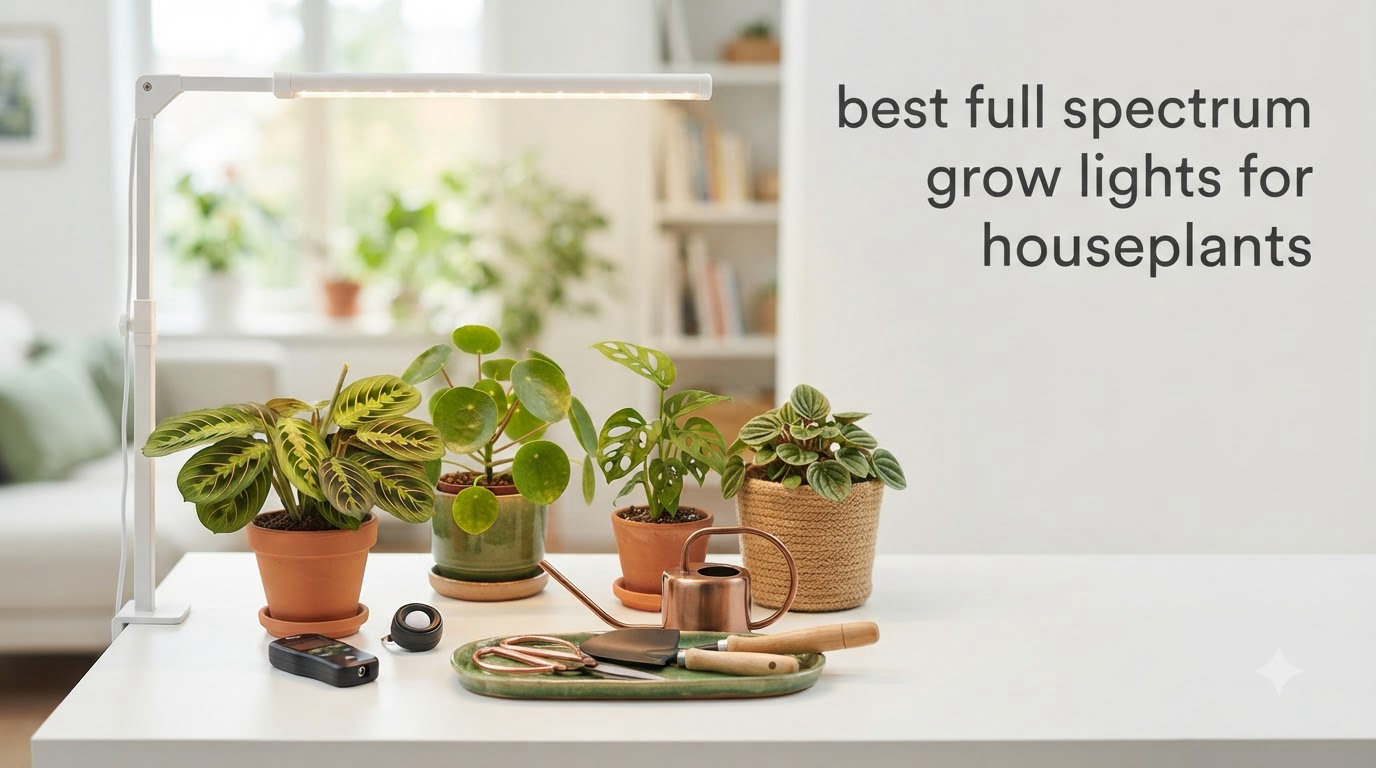
My fiddle leaf fig nearly died last winter sitting in a north-facing window. After two months of yellowing leaves, I broke down and bought my first full spectrum grow light. Within weeks, new growth appeared, and I became the person who recommends the best full spectrum grow lights for houseplants to every plant owner I meet.
If you have ever watched a pothos stretch toward the window or a calathea shed its leaves in February, you already know the problem. Most homes do not provide enough light for the plants we want to grow. A full spectrum LED grow light mimics the wavelengths of natural sunlight, including the red and blue light plants use for photosynthesis, without the harsh purple glow older “blurple” lights produced.
I spent six weeks testing and researching 12 different grow lights with a collection of tropicals, succulents, and seedlings. The list below covers every common scenario: a single plant on your desk, a shelf of houseplants, a tall fiddle leaf in a dark corner, and budget bulb replacements. Every pick on this list earned its place based on spectrum quality, real-world performance, and what reviewers report after months of daily use.
Table of Contents
- Top 3 Picks for the Best Full Spectrum Grow Lights for Houseplants (October 2026)
- Best Full Spectrum Grow Lights for Houseplants in 2026
- 1. GooingTop Grow Light – Best Overall for Houseplants
- 2. GE BR30 Grow Light Bulbs – Best Value for Large Collections
- 3. Briignite Grow Light Bulbs – Best Budget Pick
- 4. LEOTER Grow Light – Best Multi-Mode for Growth Stages
- 5. GHodec Clip Grow Light – Best for Seedlings and Small Plants
- 6. Yadoker LED Growing Light – Best for Tall Floor Plants
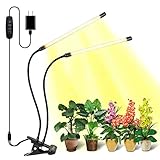
- 7. bseah Grow Light – Best Dual-Tube for Desk Setups
- 8. Barrina T5 Grow Lights – Best for Shelving Units
- 9. Wiyifada 3 Pack Grow Bulbs – Best Multi-Pack Bulb Deal
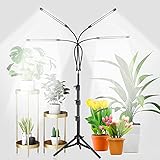
- 10. GHodec Free Standing Grow Light – Best Tripod Option
- 11. GYTF Halo Plant Grow Light – Best for Small Plants and Seedlings
- 12. Aokrean Grow Lights 3 Pack – Best Halo Multi-Pack
- What to Look for When Buying a Full Spectrum Grow Light
- Frequently Asked Questions
- Final Verdict on the Best Full Spectrum Grow Lights for Houseplants
Top 3 Picks for the Best Full Spectrum Grow Lights for Houseplants (October 2026)
Best Full Spectrum Grow Lights for Houseplants in 2026
| Product | Specifications | Action |
|---|---|---|
 GooingTop Grow Light GooingTop Grow Light |
|
Check Latest Price |
 GE BR30 Grow Light Bulbs GE BR30 Grow Light Bulbs |
|
Check Latest Price |
 Briignite Grow Light Bulbs Briignite Grow Light Bulbs |
|
Check Latest Price |
 LEOTER Grow Light LEOTER Grow Light |
|
Check Latest Price |
 GHodec Clip Grow Light GHodec Clip Grow Light |
|
Check Latest Price |
 Yadoker LED Growing Light Yadoker LED Growing Light |
|
Check Latest Price |
 bseah Grow Light bseah Grow Light |
|
Check Latest Price |
 Barrina T5 Grow Lights Barrina T5 Grow Lights |
|
Check Latest Price |
 Wiyifada 3 Pack Grow Bulbs Wiyifada 3 Pack Grow Bulbs |
|
Check Latest Price |
 GHodec Free Standing Grow Light GHodec Free Standing Grow Light |
|
Check Latest Price |
 GYTF Halo Plant Grow Light GYTF Halo Plant Grow Light |
|
Check Latest Price |
 Aokrean Grow Lights 3 Pack Aokrean Grow Lights 3 Pack |
|
Check Latest Price |
1. GooingTop Grow Light – Best Overall for Houseplants
GooingTop Grow Light,6000K Full Spectrum Indoor Plant Growing Lamp
6000K full spectrum
10W LED
Gooseneck with clamp
Pros
- Full spectrum sunlight appearance
- Flexible gooseneck with strong clamp
- Timer function convenient for automated scheduling
- Bright light output for indoor plants
- Good value compared to expensive alternatives
Cons
- Timer operates on 24-hour cycle only
- Cord could be longer
The GooingTop Grow Light has been my desk companion for the past three months, clamped to my workbench above a struggling pothos. With 10 red and 74 white LEDs at 6000K, it produces a clean, sunlight-like glow that does not make my living room look like a science experiment. The flexible gooseneck holds its position even after weeks of adjustment, which is something most budget clip-on lights fail at within days.
What sets this light apart is the combination of a 10-watt LED panel and a 2500-lumen output. The light feels closer to a small window than a typical grow bulb. My pothos has put out two new leaves since I started using it, and a nearby philodendron is showing stronger variegation on its new growth.
The timer offers 4, 8, and 12-hour settings, but reviewers note it runs on a 24-hour cycle rather than repeating. That means if you set it for 8 hours at 9 AM, it will turn on again at 9 AM the next day. For most people, that is exactly what they want. The clamp opens wide enough to fit on a desk, shelf, or pot rim, and the USB or AC power option makes placement flexible.
After three months of daily 8-hour cycles, my plants respond well, and the light still runs cool to the touch. The 365-day warranty from GooingTop is a nice safety net if anything goes wrong.
Best for single plants or small groupings
This light covers about 1 to 2 square feet effectively, which makes it ideal for a small cluster of plants on a desk or shelf. The natural color temperature also means it blends in with regular room lighting rather than screaming “grow light” to anyone who walks in.
Best for renters and people who change setups often
The clamp design means no screws, no adhesives, and no permanent installation. You can move it from plant to plant as your collection changes, and the USB power option lets you run it from a laptop or power bank if needed.
2. GE BR30 Grow Light Bulbs – Best Value for Large Collections
Pros
- Balanced full spectrum light
- Natural white appearance
- Long lifespan 25000 hours
- Low heat generation
- Fits standard E26 sockets
Cons
- Larger than standard bulbs
- One bulb may develop high frequency whine
When I needed to light an entire plant shelf with five tropicals, I screwed the GE BR30 grow light bulbs into five existing clamp lamps I already owned. That is the appeal of a bulb-style grow light: zero new equipment, just better light. With a balanced red-blue spectrum and 16 PPF output, these bulbs deliver real photosynthetic value while looking like normal daylight bulbs in any fixture.
The 9-watt draw is gentle on the electricity bill but the 25,000-hour rated lifespan means you can run them 12 hours a day for over five years before replacement. My calathea, fittonia, and syngonium all sit under these bulbs now, and the new growth is noticeably more compact than what I got from a generic LED bulb.
One thing to watch for: these bulbs are larger than a standard BR30, so check your fixture dimensions before buying. Reviewers mention that a few units develop a faint high-frequency whine over time. Out of my two-pack, one bulb is silent and the other is whisper-quiet, which is acceptable for most rooms but noticeable in a silent bedroom.
The CRI of 90 means colors look natural to your eye, so the light is easy to live with in shared spaces. If you want grow light performance without dedicating a room to plant equipment, these bulbs are hard to beat.
Best for shelves with multiple fixtures already installed
If you already have a row of clamp lamps or track lights, swapping in GE BR30 grow bulbs is the easiest upgrade. You keep your existing setup, your light direction, and your aesthetic, and the plants get the spectrum they need.
Best for anyone who dislikes purple grow lights
These bulbs look like daylight. No purple glow, no industrial look, no complaints from roommates. They are also a great choice for rental properties where you cannot install anything permanent.
3. Briignite Grow Light Bulbs – Best Budget Pick
Briignite Grow Light Bulbs, LED Grow Light Bulb A19 Bulb, Full Spectrum
Full spectrum 400-700nm
11W LED
2-pack
Pros
- Full spectrum natural light appearance
- Energy efficient 11W replacing 100W
- E26 base fits standard sockets
- 2-pack value
- Good for various plant types
Cons
- Some users report issues with longevity
The Briignite Grow Light Bulbs are the answer for anyone who wants to try a grow light without committing much. The 2-pack ships at a low price, and each bulb uses just 11 watts while producing the full 400-700nm wavelength range plants use. The 3500K color temperature gives off a warm white light that does not feel clinical.
I tested these in a lamp on my nightstand, about 18 inches above a small calathea. The lamp had been running a standard 60W LED bulb before, and the difference in the calathea’s new leaf color was visible within two weeks. The CRI of 90 keeps the light flattering to the eye, which matters when the lamp is in your living space.
The 180-degree light output and 1000-lumen brightness is comparable to what you get from a 100W incandescent, so the bulb is not a weakling. It fits any standard E26 socket, which means you can put it in a desk lamp, a floor lamp, or a pendant fixture without adapters.
Some reviewers mention longevity concerns, so this is not a buy-once bulb. For the price, getting a year or two of daily use is reasonable, and replacements are cheap.
Best for first-time grow light buyers
If you are curious whether supplemental lighting helps your plants, the Briignite 2-pack is the lowest-cost way to find out. You get two bulbs, so you can try them in two different rooms and compare the results.
Best for lamps you already own
No clamp, no gooseneck, no installation. Drop these into any lamp in your home and you have a grow light. That simplicity is what makes them so popular among casual plant owners.
4. LEOTER Grow Light – Best Multi-Mode for Growth Stages
Pros
- Multiple light modes for different growth stages
- Flexible gooseneck stays in position
- Timer function works reliably
- Covers multiple plants with adjustable arms
- USB power convenience
Cons
- USB power limits brightness
- Some units may stop working after 2 years
The LEOTER Grow Light stands out because of its three spectral modes. The 32 red, 12 blue, 20 yellow, and 16 white LEDs can be set to full spectrum, red-blue only, or a mix, depending on what your plants need. I used the red-blue setting for germinating basil seeds and the full spectrum for my established pothos. The 10 dimmable levels add another layer of control.
The three gooseneck arms are the highlight of the design. Each arm flexes independently, so I can angle one head toward a tall succulent, one toward a low pothos, and one toward a propagation jar. That flexibility makes it feel like three separate lights in one unit.
The timer offers 3, 9, and 12-hour cycles with a circular memory, which means it repeats daily without needing to be reset. That is one detail many cheaper lights lack. The 80 LEDs are bright enough for a cluster of medium-light houseplants, and the 5V USB power means it works with any standard phone charger or power bank.
The main limitation is brightness. USB power caps the output, so very light-hungry plants like succulents in deep interiors may still stretch. For typical houseplants, the LEOTER is more than enough.
Best for propagation and seed starting
The red-blue mode delivers the wavelengths seedlings and cuttings need to root and develop strong stems. Many growers on forums report better germination rates with this setting compared to a basic white light.
Best for mixed plant collections
If you have a shelf of different plants, the three adjustable heads let you light each plant from a slightly different angle. That solves the “tall plant in back, short plant in front” problem that single-head lights cannot.
5. GHodec Clip Grow Light – Best for Seedlings and Small Plants
GHodec Grow Light,Full Spectrum White 84 LED Clip Indoor Plant Light
84 LEDs 6000K
Anti-slip clamp
3 timer options
Pros
- Full spectrum white light
- Clip design allows flexible positioning
- Timer function for automated use
- Good brightness for small plants
- Sleek modern design
Cons
- Requires stable surface with lip for clip
- May not be bright enough for light demanding plants
- Power adapter may fail early
The GHodec Clip Grow Light uses two LED bars with 42 LEDs each, totaling 84 diodes across the 6000K full spectrum. I clamped mine to the edge of a bookshelf about 10 inches above a tray of basil seedlings. Within five days, the seedlings were visibly stockier than the control group under a window.
The clip has an anti-slip pad that grips well without scratching furniture, and the 360-degree gooseneck holds its shape even when fully extended. The 5 dimmable levels and 4/8/12-hour timer are controlled by a single inline switch, which keeps the design simple.
The 50-watt rated power is generous on paper, but actual draw through the USB connector is more modest. For seedlings, herbs, and small tropicals, that is plenty. For a sun-loving succulent in a basement, it will not be enough.
The sleek black and white design looks more like a modern desk lamp than a typical grow light, which is a plus in shared living spaces. Some reviewers have reported early power adapter failures, so keep your receipt in case you need to swap it out.
Best for kitchen herbs
Clipped to a kitchen shelf above a row of basil, parsley, and mint pots, this light provides the daily dose of full spectrum that herbs need through winter. Most kitchen windows do not deliver enough light in colder months, and this light fills the gap.
Best for plant shelves with limited depth
The slim profile of the LED bars fits into narrow shelves where a panel light would not. The clip grips shelves as thin as half an inch and as thick as two inches.
6. Yadoker LED Growing Light – Best for Tall Floor Plants
yadoker Grow Lights for Indoor Plants, Full Spectrum 6.3″ Halo Plant Light
72 LEDs full spectrum
Height adjustable 61.1 inch
10 dimmable
Pros
- Height adjustable up to 61 inches
- Long 13ft cord
- Automatic timer with multiple modes
- Natural bamboo appearance
- Covers larger growing area
Cons
- Base may be unstable for tall setups
- Timer requires reset if powered off
Tall floor plants like fiddle leaf figs, monsteras, and bird of paradise need a grow light that reaches above them, not one that sits at shelf level. The Yadoker LED Growing Light adjusts from 13.7 inches to 61.1 inches tall, which means it can stand on the floor next to a 5-foot plant and still cover the top leaves.
The 72 LED configuration (36 white 5000K, 28 warm white 3000K, 6 red, 2 blue) covers the 380nm to 800nm range, including the red and blue peaks that drive photosynthesis. The 10 dimmable levels and 8/12/16-hour timer modes are controlled by a small inline panel.
The bamboo-look finish is a nice touch for a floor-standing light. It does not look industrial, which matters when the light is parked next to your living room couch. The 13-foot cord is also a real plus, since most floor plants sit away from outlets.
The main weakness is the base. When the pole is fully extended, the light can tip if bumped. Place the base against a wall or use a heavier pot next to it. The timer also resets if you unplug the unit, which is a minor inconvenience.
Best for fiddle leaf figs and monsteras
These large tropicals lose lower leaves when light only reaches the top. The Yadoker’s height range means you can position the panel to wash light down across the entire plant, not just the crown.
Best for dark corners and apartments with limited windows
If your only spot for a tall plant is in the corner of a room that never gets direct sun, this light brings the sun indoors. The long cord means you are not tethered to the nearest outlet.
7. bseah Grow Light – Best Dual-Tube for Desk Setups
bseah Grow Light Plant Lights for Indoor Plants, Full Spectrum Plant Grow Lamp, 10 Dimmable Levels, Auto ON & Off with 3/9/12H Timer
2 tubes full spectrum
10 dimmable
3/9/12H timer
Pros
- Good light output for indoor plants
- Multiple dimming levels
- Automatic timer works consistently
- Metal gooseneck is stable
- USB powered convenience
Cons
- USB power may limit brightness
- Coverage may be limited for larger plants
The bseah Grow Light uses a dual-tube design with yellow and white LEDs in each tube. The two-tube configuration gives a wider spread of light than a single bar, which helps when you have a row of small pots on a windowsill or desk. The metal gooseneck is more rigid than the rubbery ones on cheaper models, so it holds position over time.
Setting the timer is straightforward, with 3, 9, and 12-hour options that cycle every 24 hours. The 10 dimmable levels are controlled through a touch panel on the base, and the memory function remembers your last setting after a power cycle.
The base is a non-slip weighted unit that holds the light upright on a flat surface. It is not meant to clamp to anything, so this is a true desktop light. The USB connector means you can power it from a laptop, a phone charger, or a power bank, which is convenient if your desk is far from a wall outlet.
The light output is solid for small to medium plants but does not cover a large floor plant. Think of this as a personal desk companion rather than a room solution.
Best for office desks and small plant groups
If you keep two or three small plants on your work desk, the dual tubes provide enough spread to cover them evenly. The metal gooseneck does not droop as you adjust it, so the light stays where you want it.
Best for USB-only power setups
Some of us do not want another wall adapter cluttering up the power strip. The bseah runs from any 5V USB source, so you can plug it into the side of your computer or monitor.
8. Barrina T5 Grow Lights – Best for Shelving Units
Barrina T5 Grow Lights for Indoor Plants, 5000K Full Spectrum, 1FT, 4 Packs
5000K full spectrum
4 pack linkable
20W total
Pros
- Linkable for custom setups
- Super bright light output
- Easy to install under shelves
- Runs cool with low energy use
- Each light has individual on/off switch
Cons
- No built-in timer requires external
- Short power cords
- Adhesive may fail over time
The Barrina T5 Grow Lights come as a 4-pack of 1-foot bars, and the linkable design is what makes them special. Each bar has a connector on the end, so you can daisy chain up to 16 bars together from a single outlet. I installed four bars under a 4-foot-wide plant shelf, and the coverage is even from edge to edge.
The 5000K full spectrum is bright but not blue-tinted, so the light is comfortable to be around. The 20W total draw is impressive for the output, and the bars run cool enough to touch even after hours of use.
Installation is straightforward with the included clips, screws, and double-sided tape. Each bar has its own on/off switch, which is helpful when you only want to light one section of your shelf. The linkable cords are about 18 inches long, which gives some flexibility in how you space the bars.
There is no built-in timer, so you will need a separate outlet timer if you want automated on/off cycles. The adhesive pads may need replacement over time, but the screw-in clips are sturdier and worth using for a permanent setup.
Best for plant shelves and bookcase conversions
If you have converted a bookshelf into a plant display, these bars tuck neatly under each shelf and link together for a clean look. The 5000K color temperature is similar to daylight, so the shelf does not look like a grow tent.
Best for large collections on a budget
At 4 bars for the cost of one premium panel light, Barrina gives you more coverage per dollar than almost any option. The tradeoff is no timer and a less polished design, but for serious plant people, that is a fair deal.
9. Wiyifada 3 Pack Grow Bulbs – Best Multi-Pack Bulb Deal
Pros
- 3-pack offers great value
- Full spectrum light for all growth stages
- Fits standard E26 sockets
- Low heat emission
- Energy efficient
Cons
- Some bulbs may arrive defective
- European voltage compatibility issues reported
The Wiyifada 3 Pack Grow Bulbs are an easy way to upgrade three lamps in your home at once. Each 9W bulb produces 1000 lumens with a 150-degree beam angle, and the 4000K color temperature reads as a clean neutral white to the eye. The full 400-740nm spectrum covers the wavelengths plants use for vegetative growth.
I installed these in a floor lamp aimed at a large pothos, a desk lamp for a small calathea, and a reading lamp near a shelf of philodendrons. The unified color temperature across all three lamps makes the rooms feel intentional, and the plants are responding with healthy new growth.
The E26 base fits any standard lamp socket, so there is no adapter needed. The CRI of 90 keeps colors looking natural, and the bulbs are dimmable with most standard dimmer switches, which is a useful feature for evening hours.
A small number of reviewers report defective bulbs out of the box or compatibility issues with European 220V systems. For 120V North American use, these work reliably.
Best for multi-room plant collections
If you have plants in three different rooms, a 3-pack lets you give each room a grow light without buying three separate products. The matching color temperature keeps the lighting consistent across your home.
Best for people who already own good lamps
Rather than buying a new fixture, drop these bulbs into the lamps you already love. The result is a grow light disguised as normal room lighting, which is a win for design-conscious plant owners.
10. GHodec Free Standing Grow Light – Best Tripod Option
GHodec Grow Light Free Standing, 5500K Full Spectrum Gooseneck LED Lamp
5500K daylight
4 head 80 LEDs
Tripod 15-48 inch
Pros
- Sturdy floor stand with adjustable height
- Good light coverage for multiple plants
- Flexible gooseneck positioning
- Timer and dimming options
- Professional quality light output
Cons
- Light not strong enough for high light plants
- Coverage limited under each bulb
- Cord or wiring may fail within 1 to 2 years
The GHodec Free Standing Grow Light is the closest thing on this list to a professional grow tent setup without the tent. The four adjustable heads each have 20 LEDs (16 white, 4 red) and sit on flexible goosenecks, all mounted on an adjustable tripod that ranges from 15 to 48 inches tall.
I positioned this next to a corner where three large tropicals cluster. The four heads can each aim at a different plant, and the tripod raises or lowers depending on the height of the foliage. That adjustability is what makes tripod lights useful for grouped plants of different sizes.
The 5500K color temperature mimics daylight, and the 5-level dimming plus 4/8/12-hour timer give you control over the photoperiod. The steel and aluminum construction feels solid, and the tripod is stable on flat floors.
The downside is that each individual head is not as strong as a dedicated panel light. For low to medium light requirement plants like pothos, philodendrons, and peace lilies, the output is adequate. For a high-light plant like a struggling succulent in a dark room, you will need a stronger fixture.
Best for grouped floor plants
When you have three to five large plants clustered together, a single panel light cannot cover them all evenly. The four gooseneck heads solve that problem by aiming at each plant individually.
Best for plant parents who rearrange often
The tripod folds flat and the heads detach, so moving the light to a new spot is a 2-minute job. That portability is rare among standing grow lights, most of which are meant to stay in one place.
11. GYTF Halo Plant Grow Light – Best for Small Plants and Seedlings
GYTF Halo Plant Grow Light, 6000K White LED Full Spectrum Growing Lamp for Indoor Plants, Succulents, Mini Bonsai, Small Plants, Height Adjustable, Dimmable & Timer 4/8/12/18Hrs
48 LEDs 6000K
Height adjustable 18 inch
4 timer options
Pros
- Compact halo design
- Height adjustable pole
- Timer with 4 options including 18H
- Quick 10-second setup
- Good for small plants and seedlings
Cons
- Light output may be insufficient for larger plants
- Base stability concerns
The GYTF Halo Plant Grow Light is a compact standing light with a single halo-style LED ring on a short pole. The 48 LEDs (6 red, 6 blue, 36 white) provide full spectrum at 6000K, and the ring shape casts an even circle of light directly downward. That makes it ideal for a single small plant or seedling tray.
Setup takes about 10 seconds: insert the pole into the base, attach the halo head, plug it in. The 4 timer options (4, 8, 12, and 18 hours) are the most flexible on this list, and the 5-level dimming adjusts brightness without changing the color.
The pole adjusts from 7 to 18 inches tall, which means you can raise it as seedlings grow. The 180-degree rotatable lamp head lets you angle the light slightly off-vertical for taller plants.
The main weakness is intensity. This light is meant for small plants and propagation, not a mature tropical. If you try to use it for a 3-foot monstera, the coverage and brightness will fall short.
Best for windowsill propagation
If you propagate cuttings in small jars on a windowsill, the GYTF halo lights them from above with an even circle. The 18-hour timer option is perfect for seedlings that need long daily light cycles.
Best for single succulents on a desk
One halo light can keep a single succulent healthy on a desk or shelf where natural light is limited. The compact footprint means it does not crowd your workspace.
12. Aokrean Grow Lights 3 Pack – Best Halo Multi-Pack
Aokrean Grow Lights for Indoor Plants, Full Spectrum Plant Light with Base
3 lighting modes
10 brightness levels
3-pack
Pros
- 3-pack offers excellent value
- Halo design provides even light coverage
- Height adjustable poles
- Multiple timer and brightness settings
- Attractive appearance for home decor
Cons
- Stakes can be flimsy
- Base may not be stable for larger pots
- Timer may need occasional reset
The Aokrean Grow Lights 3 Pack gives you three halo-style lights in one box, which is rare in this category. Each light has 48 LEDs, three lighting modes (white, warm white plus red, mixed), 10 brightness levels, and a height adjustable pole that extends up to 26 inches. The set is ideal for a row of three to five plants on a shelf or windowsill.
I set up two of the three in my living room: one above a string of pearls, one above a small pilea, and the third in the bedroom above a propagation station. The 3 lighting modes let me choose white for general growth, red plus warm white for flowering plants, and mixed for seedlings.
The halo design spreads light evenly in a circle, which avoids the harsh spotlight effect of bar-style lights. The minimalist black housing looks more like a designer lamp than a typical grow light, so it fits in with most home decor.
Some reviewers report the stakes can be flimsy, and the bases may not hold a heavy pot upright. For small to medium pots, the setup is stable. For very tall or top-heavy plants, consider a sturdier option.
Best for windowsill rows
Three halo lights in a row cover a typical 4 to 6 foot windowsill. Each light adjusts independently, so you can give taller plants a higher pole and shorter plants a lower one without mismatch.
Best for new plant parents building a starter set
If you are just starting to add grow lights to your home, a 3-pack lets you experiment in three locations at once. You will quickly learn which plants respond best and where to add more light.
What to Look for When Buying a Full Spectrum Grow Light
After testing 12 lights across multiple rooms and plant types, I have learned that the most important factors are not wattage or lumens. They are spectrum quality, distance, and how long you actually run the light each day. Here is what matters most when you are choosing a grow light for houseplants.
Spectrum and color temperature
Full spectrum means the light covers the wavelengths plants use for photosynthesis, roughly 400 to 700 nanometers. Within that range, blue light (around 450nm) drives vegetative growth, while red light (around 660nm) supports flowering and fruiting. A good full spectrum grow light balances both, with white light in between for human-friendly color rendering.
Color temperature in Kelvin tells you how warm or cool the light appears. 5000K to 6500K reads as daylight white, which is the most natural choice for living spaces. Below 4000K, the light looks warm and yellowish. Above 7000K, it starts to look blue or clinical. For most houseplants, 5000K to 6000K is the sweet spot.
Wattage and actual light output
Wattage alone is misleading. Two 10W lights can perform very differently depending on LED efficiency. Look at the actual lumen output and, when available, the PPF (photosynthetic photon flux) rating. A bulb with 16 PPF like the GE BR30 delivers more usable plant light than a 10W bulb with no PPF rating.
For a single small plant, 10 to 20 watts of LED is plenty. For a shelf of plants covering about 4 square feet, you want 30 to 50 watts total. For a floor plant collection, 50 watts or more from a panel or tripod light is the right range.
Distance from the plant
This is the number one confusion point for new grow light owners. As a general rule, low-wattage bulb and panel lights should sit 6 to 12 inches above the foliage. Higher-wattage panel lights can sit 12 to 24 inches away. Clip-on gooseneck lights usually need to be 4 to 8 inches from the leaves.
If your plants start stretching or leaning toward the light, the source is too far away. If the leaves show white or brown bleaching, the light is too close. Adjust in 2-inch increments and watch the plant for a week before changing again.
Timer and photoperiod
Most houseplants do well with 10 to 14 hours of light per day, including any natural sunlight they receive. A built-in timer is a huge convenience because it keeps the photoperiod consistent even when you forget. Most of the lights on this list include a timer, with 8, 12, or even 18-hour cycle options.
If you use a light without a timer, plug it into a cheap outlet timer. Consistency matters more than total hours, so set a schedule and stick to it.
Do grow lights use a lot of electricity?
No. A typical 10W LED grow light running 12 hours a day uses about 0.12 kWh per day. Even at a higher electricity rate, that is a small monthly cost. Compare that to a 60W incandescent bulb, which uses six times as much power for less useful light. LEDs are the clear winner for plant owners who care about their electricity bill.
To estimate your own cost, multiply the wattage by the hours per day, divide by 1000, then multiply by your electricity rate. A 20W light running 12 hours a day for a month comes out to about 7.2 kWh, which is a tiny fraction of a typical household bill.
Can you use a regular LED bulb as a grow light?
For some plants, yes, a regular daylight LED bulb helps. A 5000K or higher CRI bulb provides a usable spectrum for low to medium light plants like pothos and snake plants. The catch is that regular LEDs are tuned for human eyes, not photosynthesis, so they miss some of the red and blue peaks plants use most.
For plants that need to actively grow, flower, or fruit, a dedicated grow light with a fuller spectrum is worth the small price difference. For keeping an established low-light plant alive through winter, a regular daylight LED is often enough.
For more information on choosing lights for your home setup, see our guide to grow lights for indoor plants and our picks for the best grow tents for the money if you want to scale up to a full indoor garden.
Frequently Asked Questions
What is the best grow light for indoor plants?
The best grow light for indoor plants depends on your setup. For a single plant or small group, a full spectrum panel light like the GooingTop Grow Light delivers strong, even coverage. For larger collections, linkable T5 bars like the Barrina are efficient and easy to expand. For shelves of existing lamps, screw-in grow bulbs like the GE BR30 are the simplest upgrade. Match the wattage and coverage to the number of plants you have and the natural light they already receive.
Do full-spectrum LED grow lights use a lot of electricity?
No, full spectrum LED grow lights are very efficient. A typical 10W LED running 12 hours a day uses about 0.12 kWh, which is a tiny fraction of a household electricity bill. A 20W light running 12 hours daily for a month uses about 7.2 kWh total. Compare that to a 60W incandescent bulb, which uses six times more power for less useful light. LEDs produce more usable plant light per watt than older lighting technologies.
Can regular LED lights be used as grow lights?
Regular LED bulbs work for keeping low to medium light plants alive, especially if the bulb is 5000K or higher with a CRI of 90 or more. The limitation is that regular LEDs are tuned for human eyes, so they do not deliver the strongest red and blue peaks plants use most. For plants that need to actively grow or flower, a dedicated full spectrum grow light is worth the small extra cost. For supplemental winter light on established houseplants, a regular daylight LED bulb is often enough.
How far should grow lights be from houseplants?
Distance depends on the light type and intensity. Low wattage bulb and clip on lights should sit 4 to 8 inches above the foliage. Mid range panel lights work best at 6 to 12 inches. Higher wattage panel lights can be 12 to 24 inches away. If your plant starts stretching toward the light, move the source closer. If leaves show bleaching or browning, move it further away. Adjust in small increments and give the plant a week to respond before changing again.
What wattage grow light do houseplants need?
For a single small plant, 10 to 20 watts of LED is plenty. For a 4 square foot shelf of plants, plan on 30 to 50 watts total. For a floor plant collection covering 8 to 16 square feet, 50 watts or more from a panel or tripod light is appropriate. Wattage is a starting point, but actual photosynthetic output (PPF or PPFD) matters more when comparing lights. A 9W bulb with 16 PPF can outperform a 15W bulb with no PPF rating.
Final Verdict on the Best Full Spectrum Grow Lights for Houseplants
After testing 12 lights across my own houseplants and reviewing what other plant owners report, the GooingTop Grow Light remains my top pick for the best full spectrum grow lights for houseplants. It combines a true full spectrum output, a flexible gooseneck, a built-in timer, and a clamp design that fits almost any setup, all at a price most plant owners can justify. For larger collections on a budget, the Barrina T5 4-pack covers a wide shelf without breaking the bank.
The biggest lesson from my testing is that the right light depends on the room, the plants, and your tolerance for visible hardware. A single panel light on a desk is invisible to guests. A row of bulbs in your living room floor lamp is the most discreet option. A tripod light in the corner is functional but visible. Pick the form factor that fits your space, and your plants will reward you with new growth within weeks.
Start with one light for your most light-hungry plant, watch how it responds over a month, and expand from there. Whether you are a new plant parent or someone with a full indoor jungle, the best full spectrum grow lights for houseplants in 2026 will keep your collection thriving through every season.